Table of Contents
The Numbers Don’t Lie
Let’s say you drive 24,000 kilometres per year. In my old car, I averaged about 6.7 L/100km. At today’s gas prices (roughly $1.60/L here in Canada), that works out to spending around $2,570 per year on fuel.
The Elantra Hybrid averages about 4.7 L/100km. Same driving distance, same fuel prices - suddenly I’m spending about $1,800 per year on gas. That’s roughly $770 in savings annually.
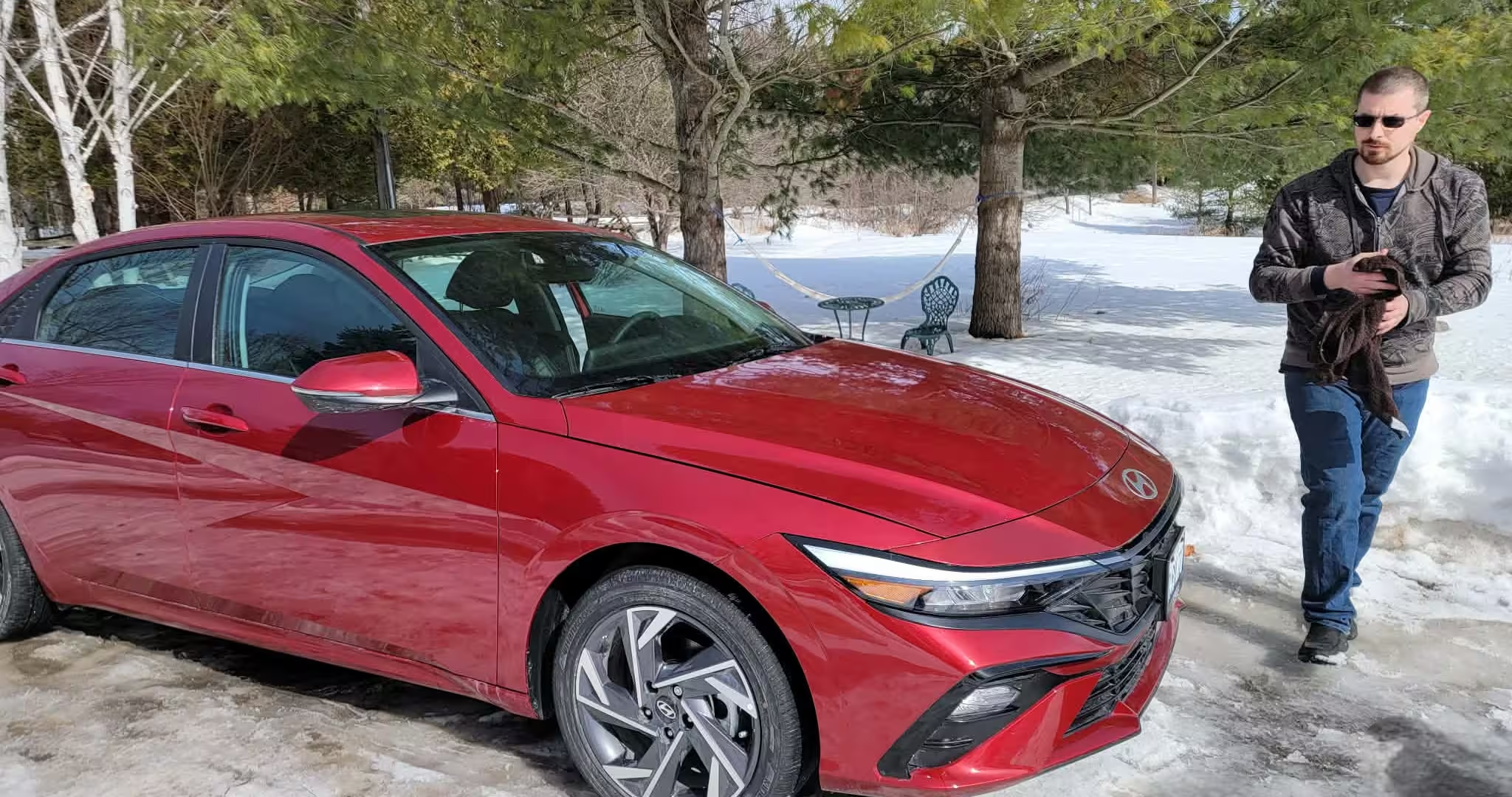
Admittedly, hybrids cost more upfront. But the fuel savings alone pay back the premium in about 5-6 years. Factor in lower maintenance costs (regenerative braking extends brake life), and the equation tilts further.
Why Not Full Electric?
I considered a full electric vehicle. There are some compelling options in the same price range, and the running costs would be even lower. But living in a rural area changes the calculus.
First, there’s the charging infrastructure problem. There’s basically no public charging anywhere nearby - the nearest stations are in town, and that’s if I’m lucky. An EV would be completely dependent on charging at home.
I could charge at home, but it would require a retrofit - a 240V outlet, probably a new panel, and installation costs that add up quickly. That’s an extra expense on top of the vehicle premium.
The bigger issue is Ontario’s electricity pricing. Time-of-use billing isn’t available where I live - it’s just not an option in my area. That means charging at night isn’t any cheaper - it’d all be additional electricity at a premium price.
That means my electricity costs per kilometre wouldn’t be dramatically better than the hybrid. Combined with the uncertainty of public charging infrastructure in a rural region, the hybrid made more practical sense.
The Future Is Electric - Just Not Yet
That said, I’m planning to go solar in the near future. Once I have solar panels on my property, the economics shift dramatically. Free electricity during the day means charging a full electric vehicle becomes far more cost-effective - and suddenly the math that doesn’t work today becomes a no-brainer.
When that happens, my next car will be fully electric. The hybrid is a stepping stone: it lets me enjoy fuel savings now while I wait for the infrastructure to catch up. Between solar panels and improving public charging networks, the day when a full EV makes sense for my situation isn’t far off.
The Verdict
I waited a long time to go hybrid. I wish I’d done it sooner. With fuel prices the way they are, the math just makes sense - and it turns out, the driving experience is better too.